A unified technology ecosystem combining autonomous hardware engineering, optical AI diagnostics (SS-Sense), and SCADA-linked telemetry to maximize kilowatt-hour generation per solar module.
Dust, dirt, pollen, and bird droppings form a blocking layer on solar PV modules. In dry, desert, or agricultural locations, this "soiling loss" reduces plant generation by up to 15%–18% within weeks. Traditional manual water cleaning poses serious problems:
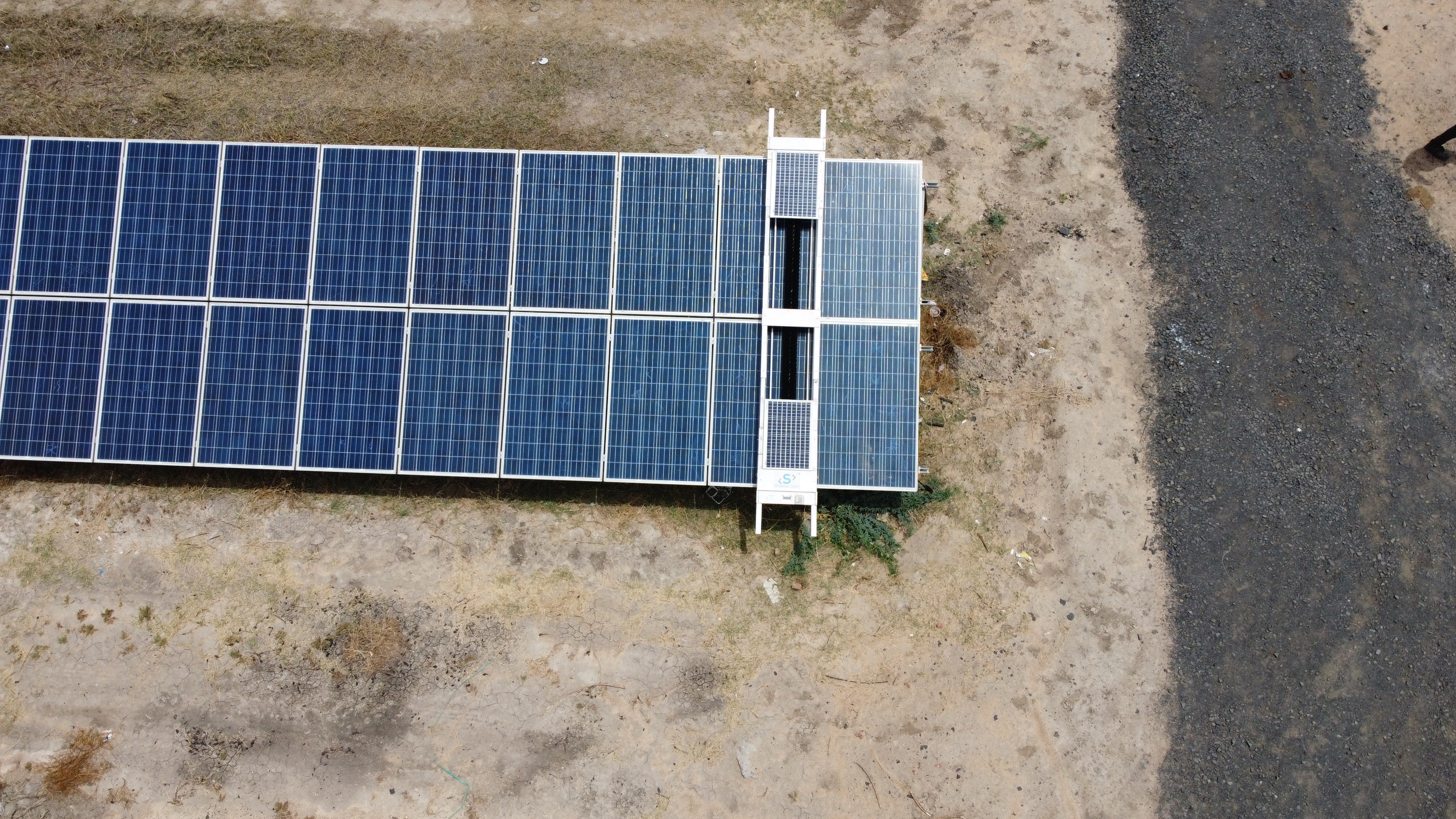
Skilancer robots solve soiling waterlessly. The system utilizes a custom-engineered **Helical PBT (Polybutylene Terephthalate)** micro-fiber brush that rotates at high speed, sweeping dust off panels without static friction.
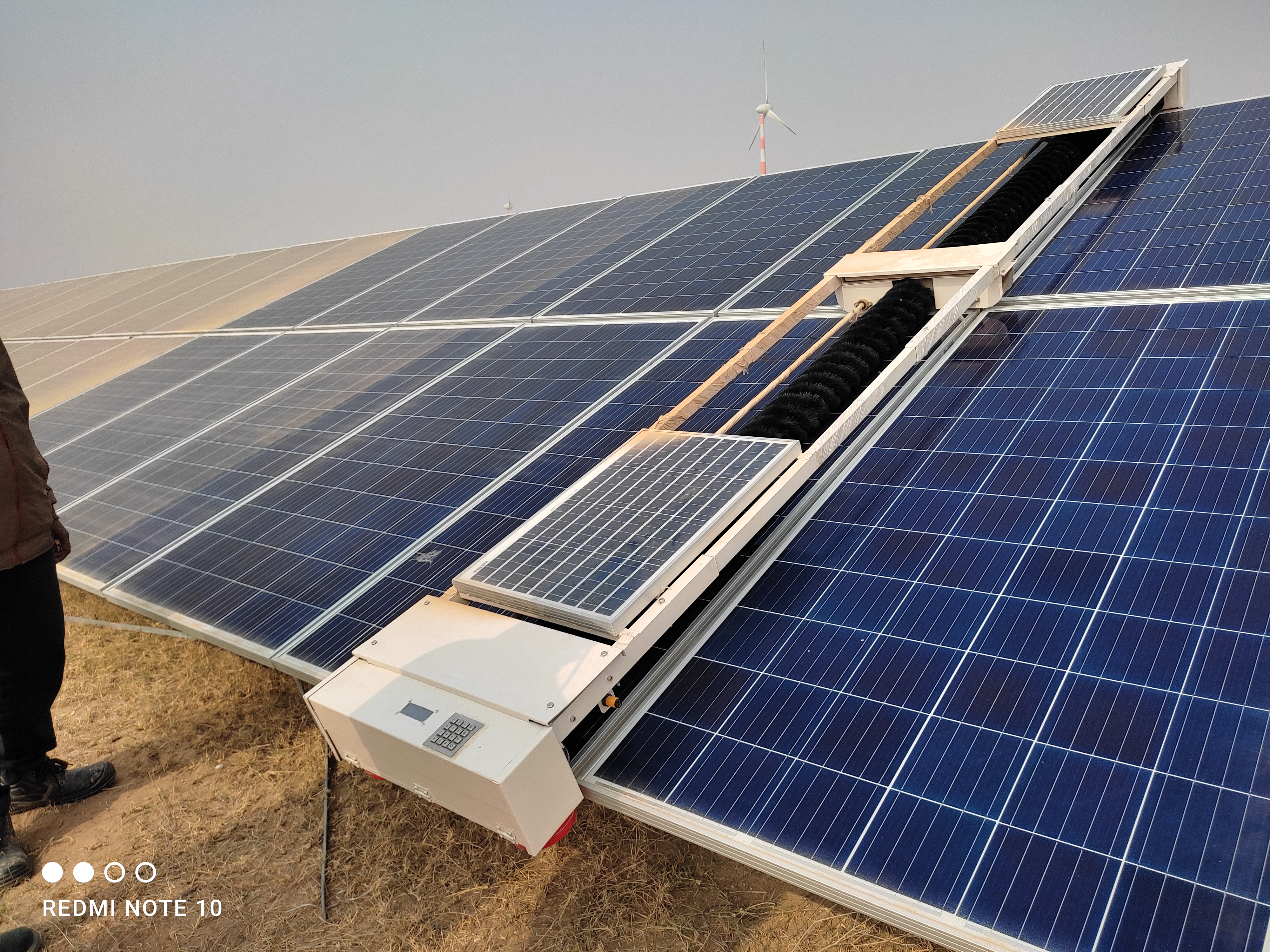
Each robot contains an on-board computer core communicating via long-range **LoRaWAN or cellular networks** to send telemetry logs back to the solar plant control room.
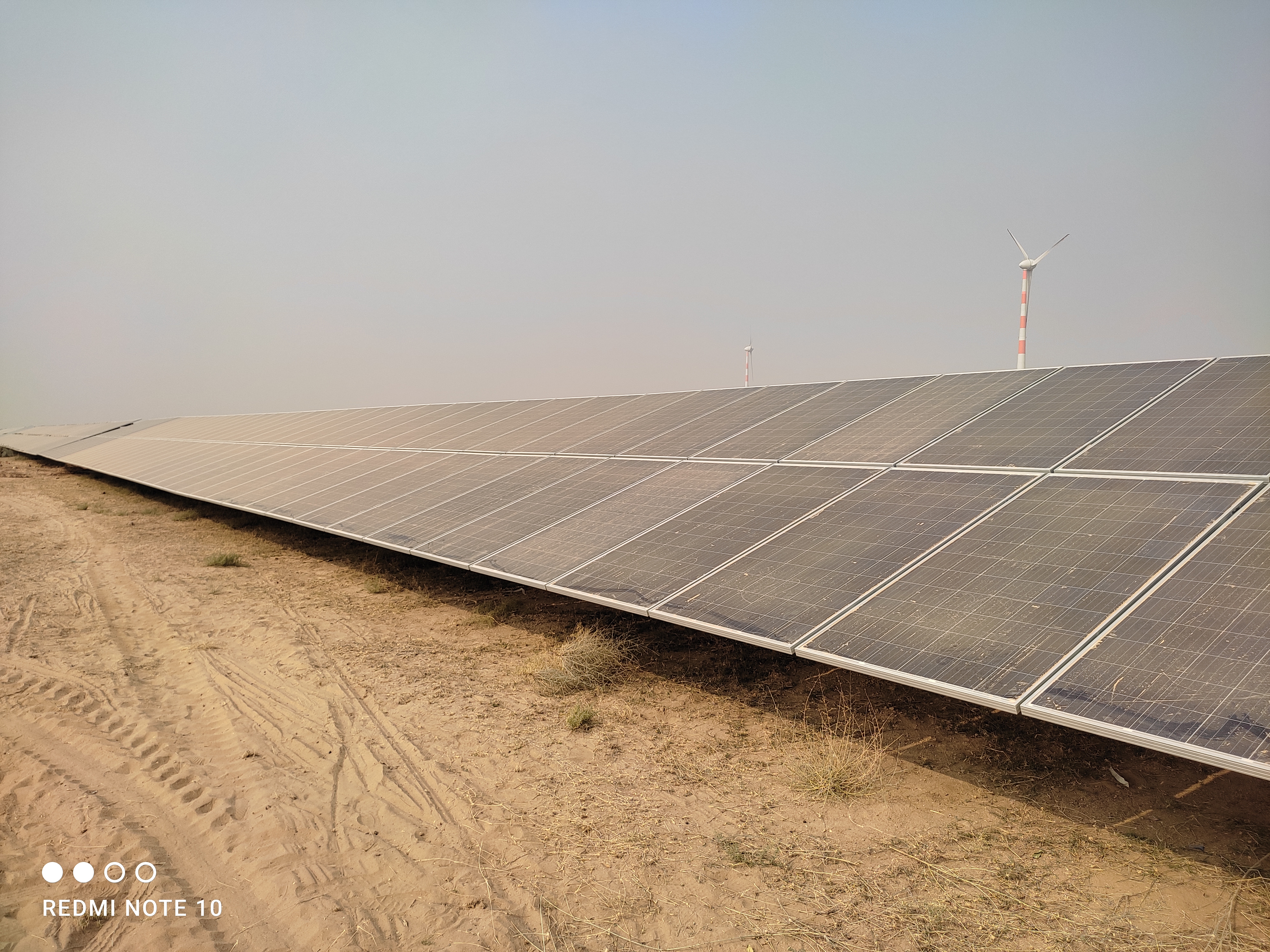
Skilancer Solar integrates **SS-Sense optical soiling sensor nodes** directly into the plant network to create a fully autonomous closed-loop "Sense & Clean" architecture.
Optical Telemetry + AI Cloud + Autonomous Robot Dispatch
A fully autonomous cycle that keeps modules clean without water, wiring or manpower.
The robot rests on the array, charging from its own onboard solar panel and heavy-duty LiFePO4 battery — zero plant power required.
On a daily schedule or on demand, it traverses the module rows guided by precision sensors and RTK-grade positioning.
A helical, ultra-soft PBT micro-fibre brush spins dust away at an angle that uses gravity and airflow — no water, no scratching, no ARC-coating damage.
Cleaning data, alarms and diagnostics stream to the SCADA/cloud dashboard over LoRa while the robot returns to dock and recharges.
Every robot is hardened for dust storms, coastal salt, extreme heat and years of daily duty cycles.
Dust-tight, water-protected enclosures with C4-class anti-corrosion protection for marine and high-humidity environments.
Battery cells and electronics are audited to sustain performance through thousands of charge cycles in extreme surface temperatures.
Precision sensors and RTK positioning give centimetre-level accuracy, with automatic weather delays for rain, storms and high winds.
Onboard telemetry tracks motor torque, wheel slip and battery wear to flag maintenance before it becomes downtime.
Self-powered and fully waterless — no water transport, no plant power draw, no manual labour on the array.
Daily cleaning holds soiling loss as low as 0.5%, recovering generation that dust would otherwise steal from your plant.